Loading
EST. 1994Contract manufacturing group
We manufacture the components other manufacturers cannot afford to get wrong.
Precision machining, heavy fabrication, tooling, and integrated assembly for equipment builders in energy, rail, semiconductor, process, and off-highway markets. Bring us a component that is failing on cost, on schedule, or in the field.
- 1,240
- People
- 67,500 m²
- Manufacturing floor
- 214
- Machine tools
- 98.6%
- On-time delivery
Across four plants in three countries
Machining, fabrication, assembly, tooling
Including 24 five-axis machining centers
Rolling twelve-month group average
POSITIONWhat we actually sell
Confidence that the part will be the same in month forty as it was at first article.
We are a contract manufacturer for equipment builders — precision machining, heavy fabrication, tooling, and integrated assembly across four plants in three countries. Customers come to us with a component that is failing on cost, on schedule, or in the field, and leave with a documented process that holds.
One routing, four plants
A program can move between machining, fabrication, assembly, and tooling without changing how it is controlled or who is accountable for it.
Engineering before quotation
Every inquiry passes a manufacturing engineer before it is costed, so the number you receive is against a routing we intend to run.
Capability, not inspection
Critical characteristics are held to Cpk 1.67 or better by process control, and demonstrated before the program is released.
The record ships with the part
Certification, traceability, and inspection data arrive with the shipment rather than weeks behind it.
CAPCapabilities
7 capabilities, run as one manufacturing system.
Each capability is a plant discipline with its own equipment, envelope, and engineers — and each one is routinely combined with the others inside a single program.
CAP-01
Precision CNC Machining
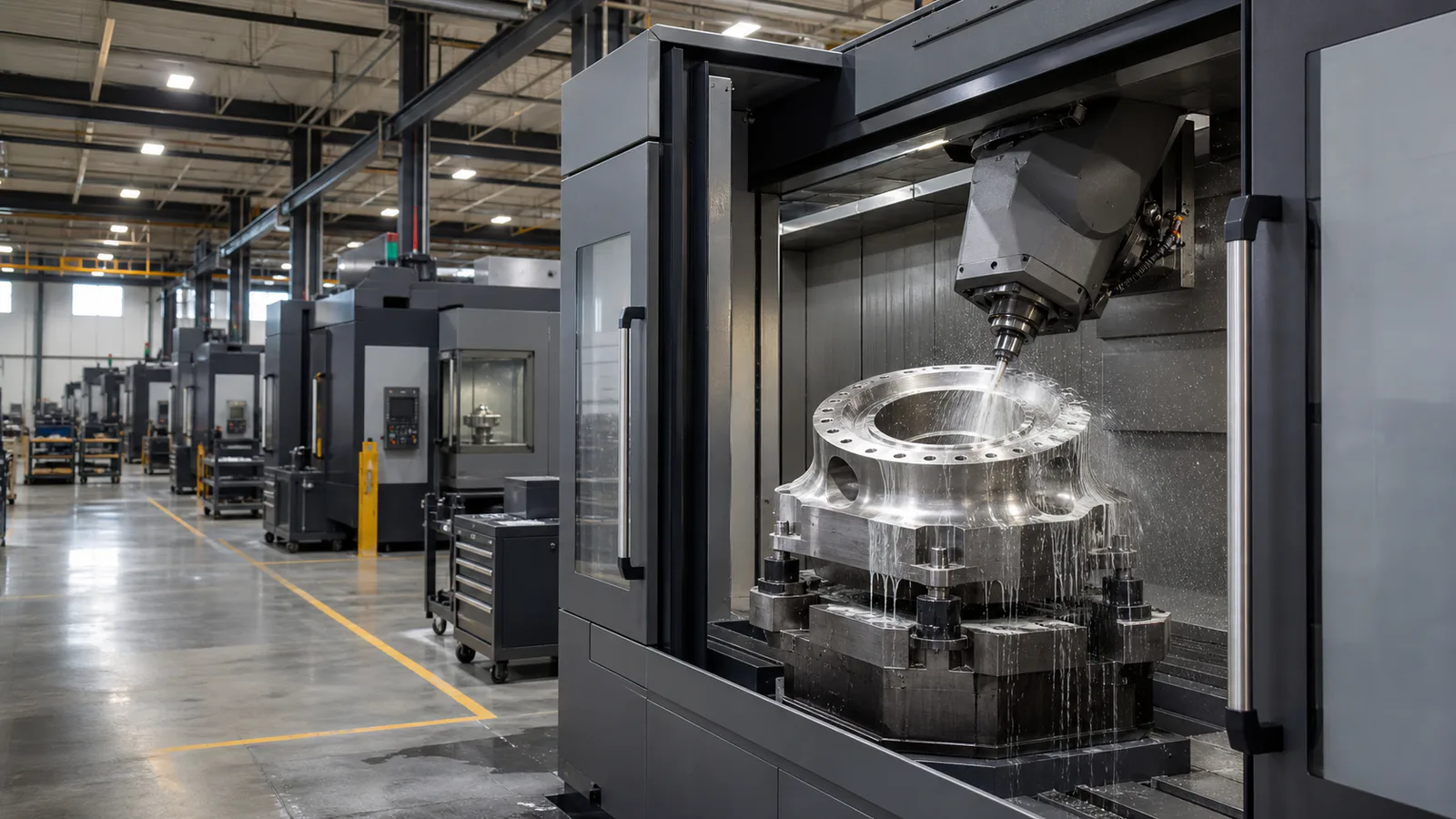
Five-axis milling and multi-task turning for close-tolerance components, from prototype cells through 40,000-piece annual programs.
- Milling envelope
- 2,400 × 1,250 × 1,100 mm
- Turning envelope
- Ø 660 mm × 1,500 mm
- Positional tolerance
- ± 5 µm
Heavy Fabrication & Weldments
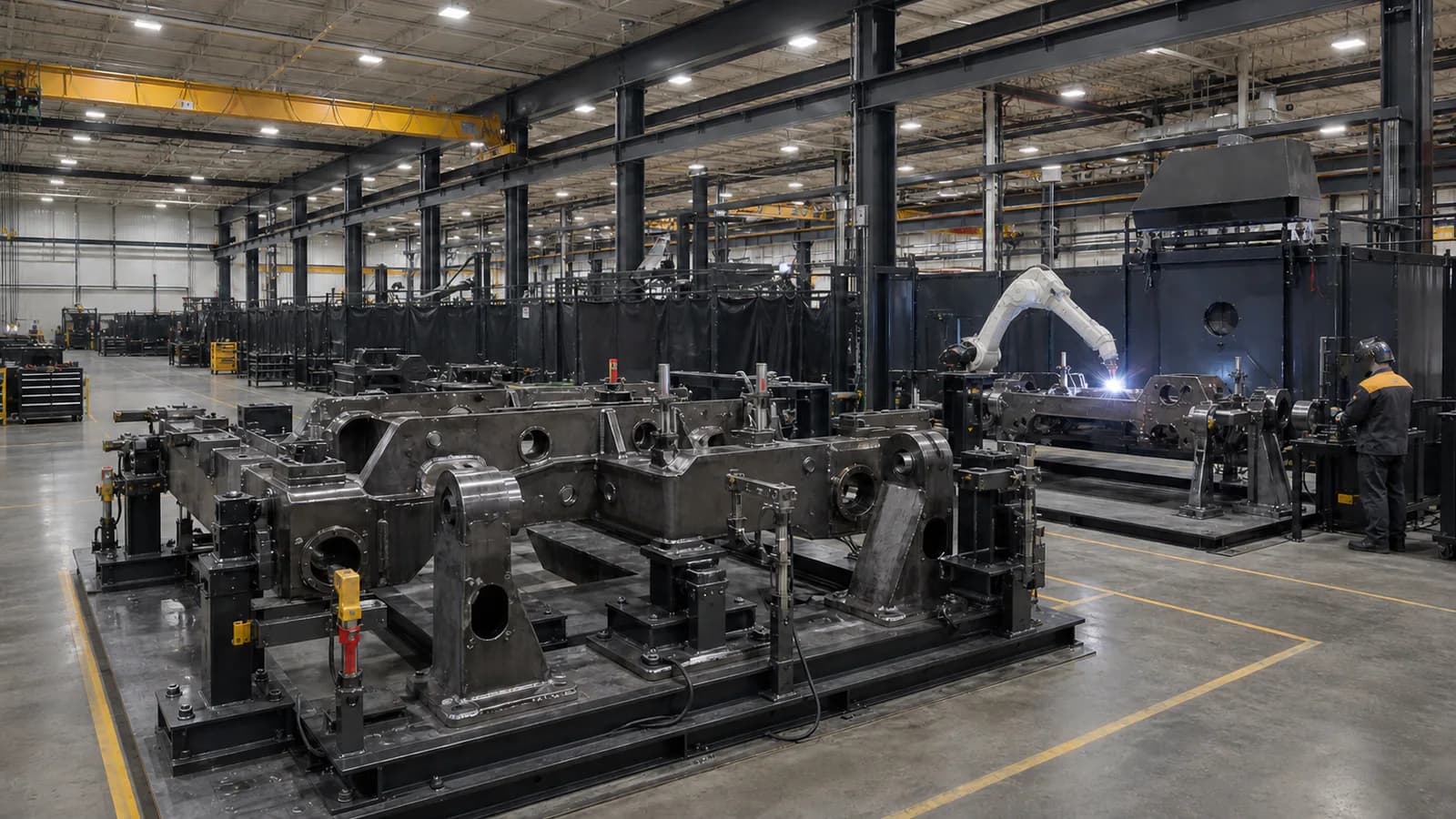
Structural weldments to 40 tonnes, with coded welding procedures, stress relief, and large-envelope machining under one roof.
- Maximum weldment mass
- 40 tonnes
- Maximum weldment size
- 12.0 × 4.2 × 3.6 m
- Plate thickness
- 3–150 mm
Tooling, Dies & Fixtures
Production tooling, progressive dies, and inspection fixtures designed and cut in-house, so tooling lead time never becomes program lead time.
- Die set size
- Up to 2,500 × 1,200 mm
- Wire EDM accuracy
- ± 2 µm
- Sinker EDM envelope
- 800 × 600 × 400 mm
Systems Assembly & Integration
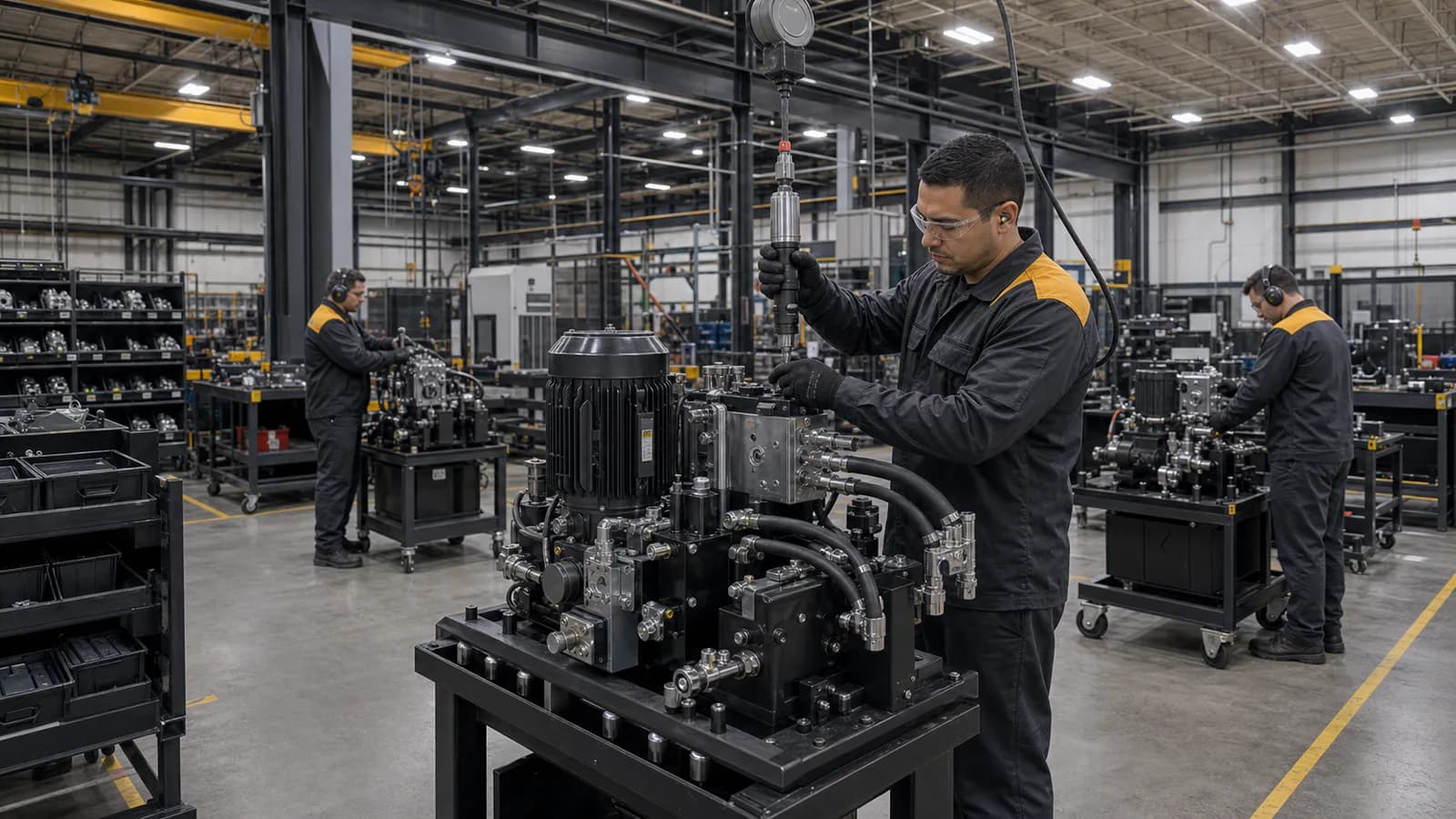
Mechanical, hydraulic, and electromechanical assembly with functional test — delivered as a complete, tested module rather than a box of parts.
- Assembly cells
- 14 mixed-model
- Clean assembly room
- 320 m², ISO Class 7
- Maximum module mass
- 6.5 tonnes
Surface Treatment & Finishing
Coating, plating, passivation, and industrial painting managed as a controlled process step with recorded thickness and adhesion results.
- Paint booth size
- 14.0 × 5.0 × 5.0 m
- Blast profile control
- 40–100 µm Rz
- Coating thickness control
- ± 15 µm
Metrology & Inspection
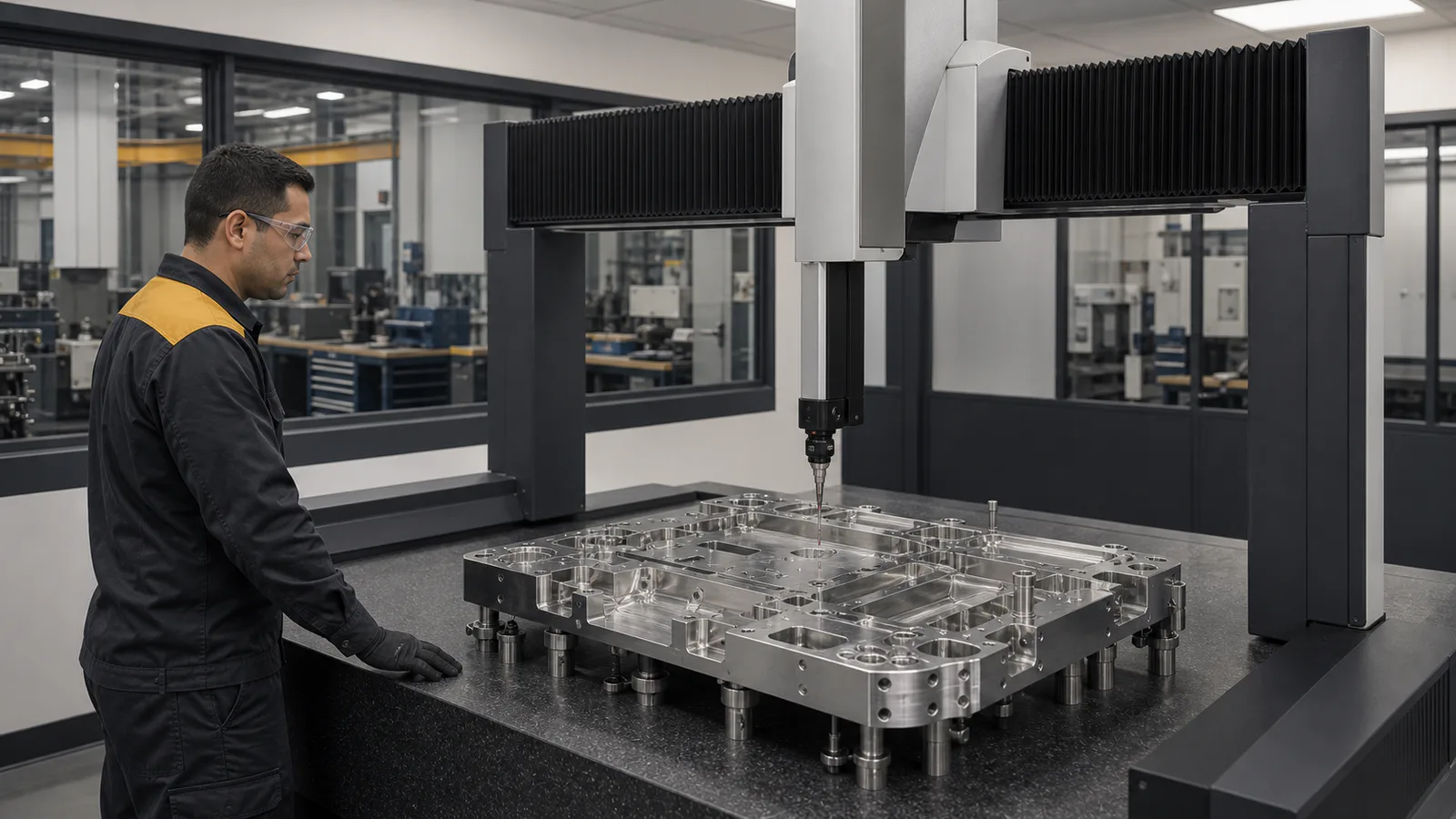
A climate-controlled metrology hall, portable measurement on the shop floor, and inspection data that ships with the parts.
- CMM volumetric accuracy
- 1.4 + L/350 µm
- Largest CMM envelope
- 3,000 × 2,000 × 1,500 mm
- Metrology hall control
- 20 °C ± 0.5, 45% RH
Manufacturing Engineering & DFM
Design for manufacturability, tolerance analysis, and process development — applied before a program is quoted, not after it struggles.
INDIndustries
6 sectors, each with a different reason a part gets rejected.
Industry pages set out what actually changes: the standards that govern the work, the failure mode that drives the specification, and the components we build most often.
Machined turbine housing sections staged for inspection inside a power equipment production bay
IND-01
Energy & Power Generation
Turbine, geothermal, and grid equipment components where material certification and dimensional stability at temperature decide service life.
Sector requirementsWelded rail bogie frame on a fixture in a fabrication bay, with weld sequence markings visible
IND-02
Rail & Transit
Bogie frames, carbody structures, and drivetrain components built to fatigue-rated welding standards and a 30-year service expectation.
Sector requirementsStainless vacuum chamber assembly under helium leak test in a clean assembly room
IND-03
Semiconductor Capital Equipment
Vacuum chambers, gas delivery hardware, and precision frames built to cleanliness and leak specifications, not just to drawing.
Sector requirementsStainless steel process vessel section being rolled and fitted in a segregated stainless fabrication bay
IND-04
Process & Chemical Equipment
Pressure-retaining and corrosion-resistant equipment for chemical, food, and water treatment plants, built to code with the documentation to prove it.
Sector requirementsRobotic cell welding a heavy equipment loader arm structure with fixtures indexed for volume production
IND-05
Off-Highway & Agricultural Equipment
High-volume structural and hydraulic components for machines that work in dirt, cold, and vibration — where cost per unit is the program.
Sector requirementsLarge aerospace assembly tooling structure being verified with a laser tracker on the shop floor
IND-06
Aerospace Ground Systems
Ground support equipment, tooling, and test structures produced under AS9100D discipline with first article inspection on every configuration.
Sector requirementsROUTEProduction route
Every program runs the same six stations.
From the first drawing to a delivered, certified shipment. The route does not change with the size of the program — only the time each station takes.
- 013–5 business days
Inquiry & Quotation
A program engineer reviews your drawings, models, and volume forecast, then returns a costed quotation with the routing we intend to use and the plant it will run in. Nothing is quoted against capacity we do not have.
- Costed quotation
- Proposed routing
- Capacity confirmation
- 021–2 weeks
Design for Manufacturability
We mark up every feature that will drive cost, scrap, or cycle time — datum schemes that fight the fixture, tolerances tighter than the function requires, wall sections that will distort in weld. You decide what changes; we document what does not.
- DFM report
- Tolerance stack review
- Material substitution options
- 032–4 weeks
Process Planning
Routings, fixtures, tool lists, and CNC programs are built and proven off-line. Control plans and the inspection method are written before the first part is cut, not after the first rejection.
- Control plan
- Fixture design
- Proven CNC programs
- 042–3 weeks
First Article & Qualification
First articles are cut on the production fixtures, on the production machine, by the production operator. Capability studies run to a Cpk of 1.67 or better on every characteristic marked critical before the program is released.
- First article inspection report
- Capability study
- Released work instructions
- 05Ongoing
Series Production
Work orders release against your forecast. Operators record in-process results at the machine, and control charts are reviewed each shift. Drift is corrected while it is still drift.
- In-process SPC
- Shift-level review
- Traceable lot records
- 06Per schedule
Inspection & Delivery
Final inspection, certification packet, and protective packing built for the transport method you actually use. Material certificates and inspection data ship with the parts, not three weeks behind them.
- Certification packet
- Material traceability
- Program-specific packaging
PLANTFacilities
4 plants, built for 4 different problems.
Machining, heavy fabrication, assembly, and tooling each have a purpose-built plant rather than a shared bay — which is why a program can be routed to the place that suits it.
Plant 01
Brightwater Works
The original plant and the group's precision machining center, running three temperature-stabilized halls and a lights-out pallet system.
Brightwater, United States
Plant 02
Calder Ridge Fabrication
The group's heavy plant: plate processing through welding, stress relief, and finish machining without leaving the building.
Calder Ridge, United States
Plant 03
Vela Norte Assembly
Fourteen mixed-model assembly cells building tested modules, with a dedicated ISO Class 7 clean assembly room.
Vela Norte, Mexico
Plant 04
Ostmark Tooling & Metrology
Tooling construction, wire and sinker EDM, and the group's climate-controlled metrology hall on an isolated foundation.
Ostmark, Germany
QMSQuality system
Control the process, not the inspection.
Inspection tells you what already happened. Control plans, capability studies, and in-process measurement are how a characteristic is actually held.
Group performance12-month average
- On-time delivery
- 98.6%
- First-pass yield
- 99.2%
- Customer PPM
- 148
- Capability target
- Cpk ≥ 1.67
- Corrective action closure
- 22 days average
- Record retention
- 15 years
- ISO 9001:2015
- AS9100D
- ISO 14001:2015
- ISO 45001:2018
- EN 15085-2 CL1
- ISO 3834-2
PRJProjects
Programs we were brought in to fix.
Each project below started as a component that was failing on cost, schedule, or quality at another supplier.
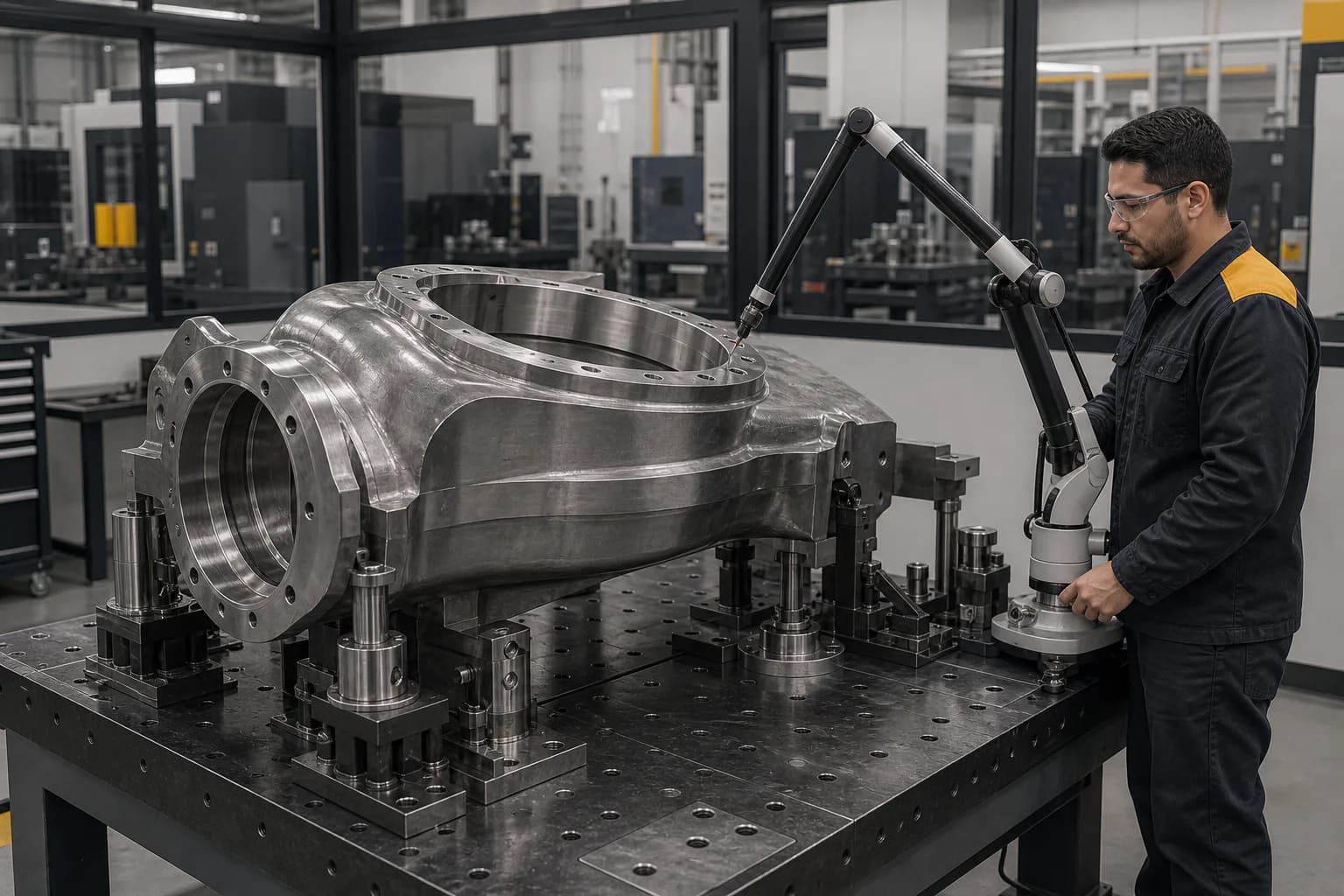
PRJ-2024-112024
Geothermal turbine housings, requalified and reshored
Meridian Geothermal Group
A 22-week import lead time and recurring flatness rejections replaced with a single-source domestic route running at 9 weeks.
- 22 → 9 weeks
- Lead time
- 11.4% → 0.6%
- Flatness rejections
- −14%
- Landed cost
- Ongoing since 2024
- Program duration
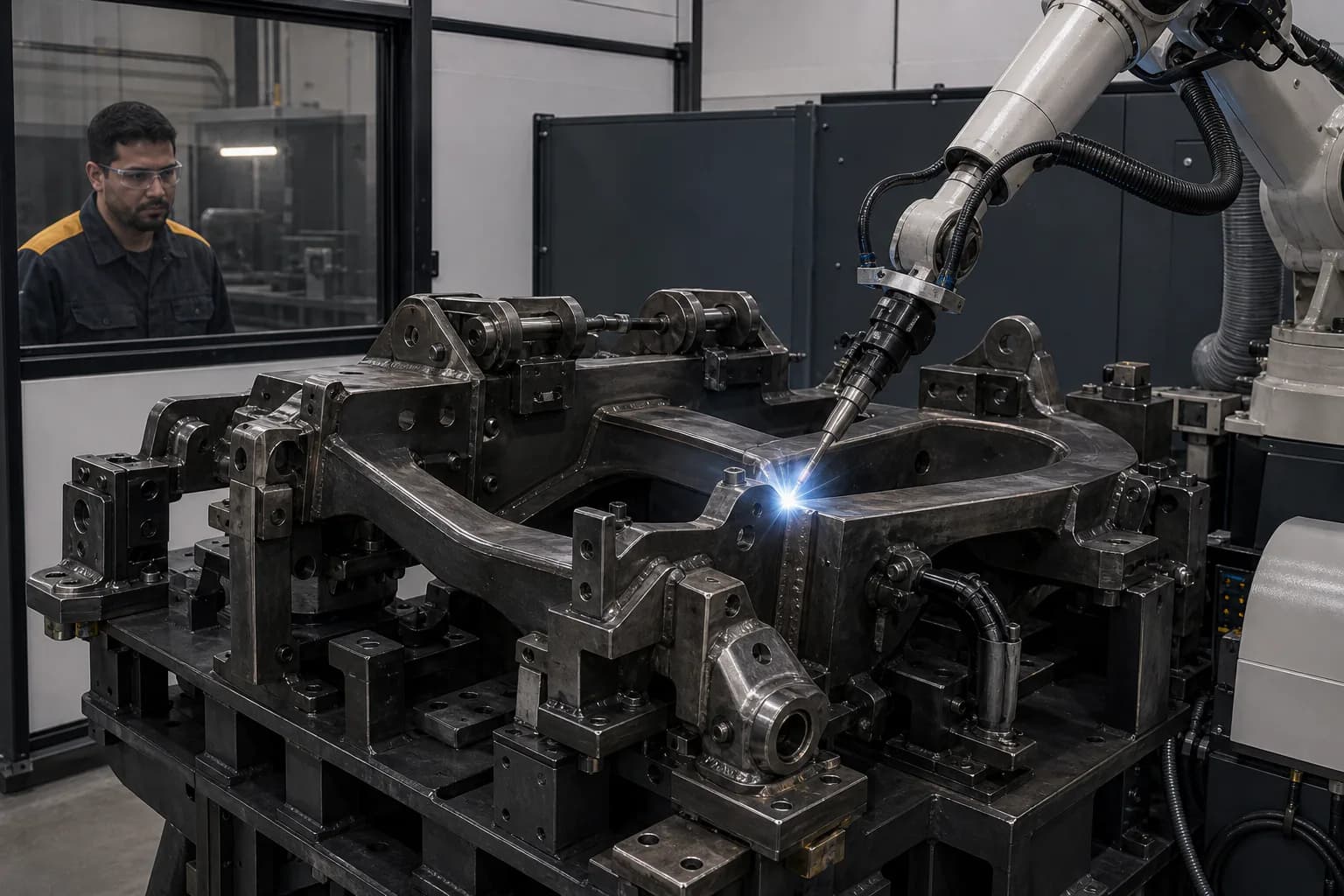
PRJ-2023-042023
Bogie frame production line for a regional fleet program
Northline Rolling Stock
1,800 fatigue-rated bogie frames per year, with weld distortion engineered down 63% so machining removes stock instead of correcting shape.
- 1,800 frames
- Annual volume
- −63%
- Weld distortion
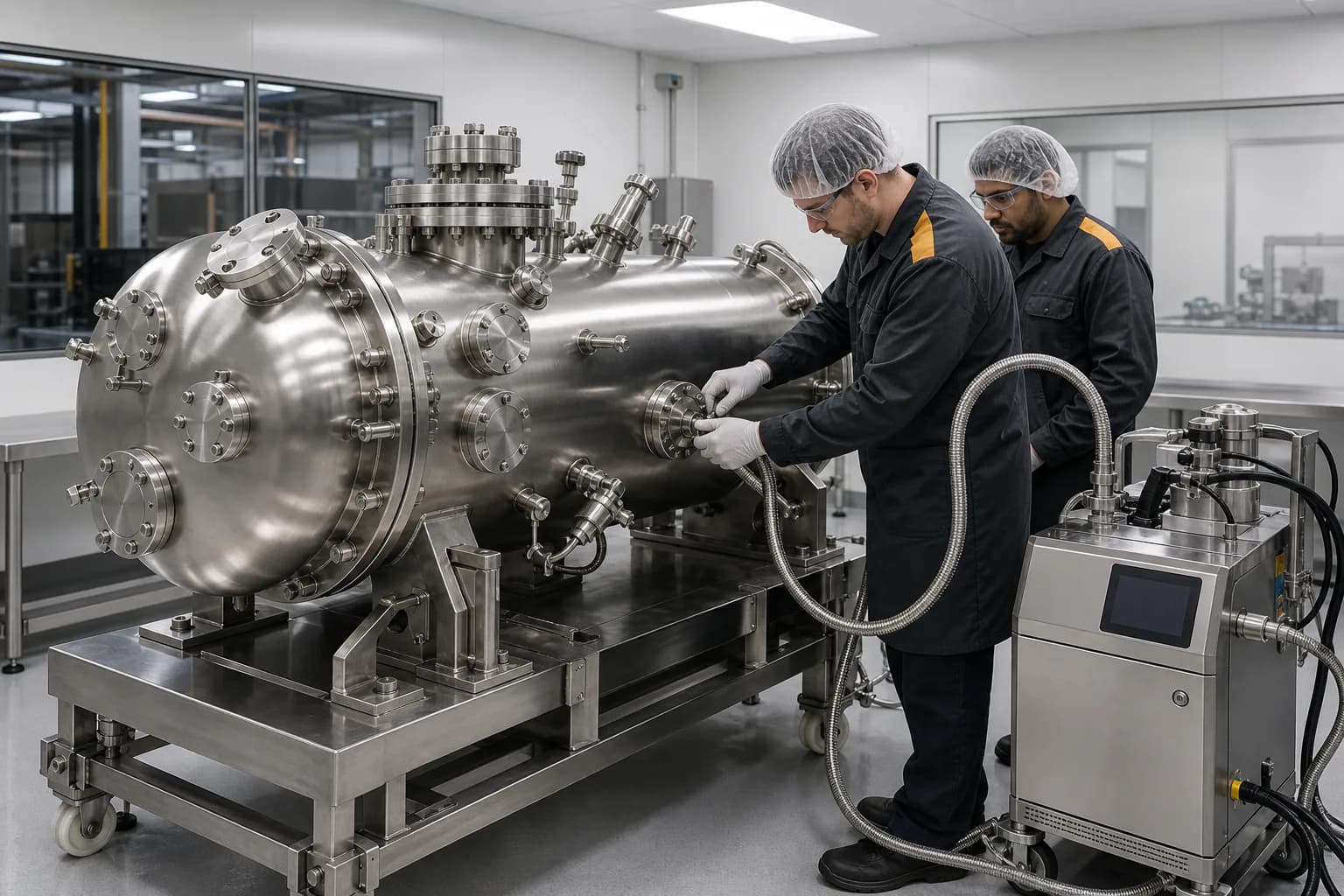
PRJ-2025-022025
Vacuum chamber assemblies at a nine-week revision cadence
Axiom Vacuum Systems
Clean-built chamber assemblies leak tested to 1 × 10⁻⁹ mbar·L/s, with three configurations running in parallel without cross-contamination.
- < 1 × 10⁻⁹ mbar·L/s
- Leak rate achieved
- 97.8%
- First-pass leak test
RFQRequest for quotation
Tell us what you need made, and where it is going wrong.
Send drawings or a model with your annual volume and required delivery date. A manufacturing engineer reviews every inquiry before it is costed, and you will have an acknowledgment within one business day on +1 812 555 0140.
Monday to Friday, 7:00 AM –6:00 PM ET